Skip to content
Video2Any
Free local tool
Processed in this tab

Turn a webinar recording into slides

Drop the webinar video, walk away with an editable deck.

What it got out of a real recording

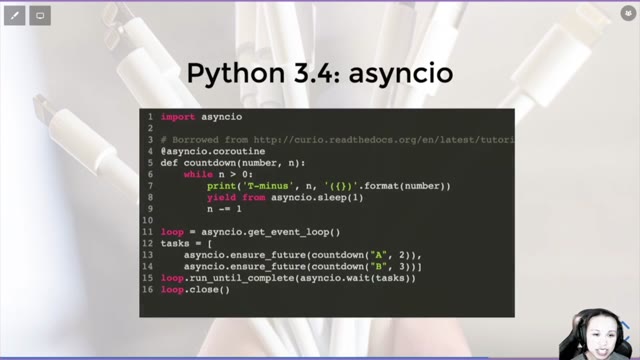
Don't be Afraid of Async · Cheuk Ho and Xithrius · FOSDEM 2021 · Python devroom
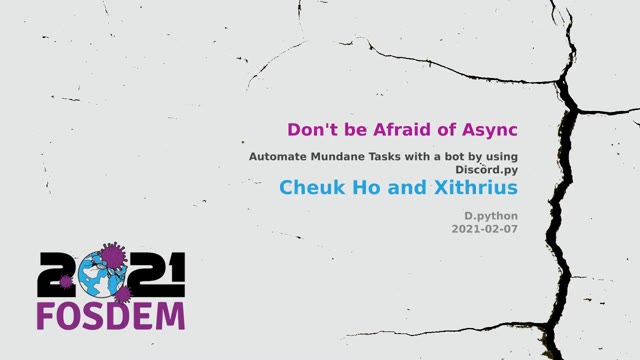
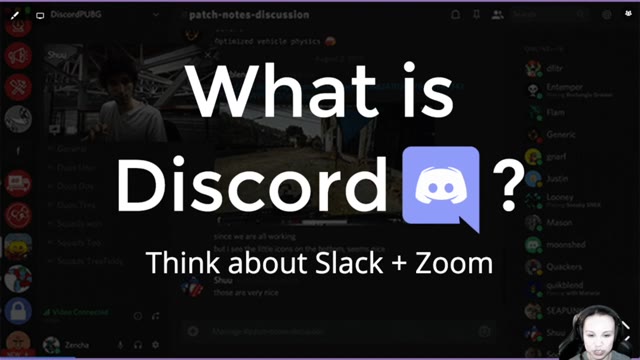
  1. Slide 1 of “Don't be Afraid of Async”, kept at 0:00

    #1 · 0:00

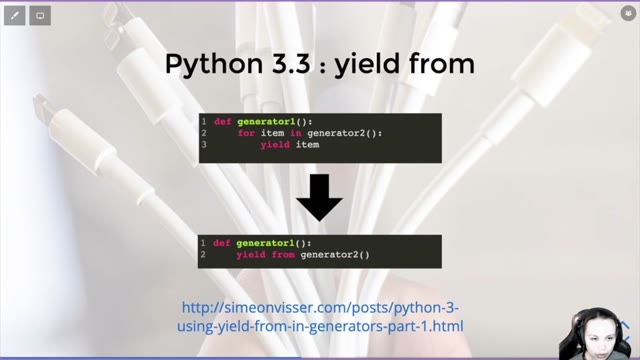
  2. Slide 5 of “Don't be Afraid of Async”, kept at 2:32

    #5 · 2:32

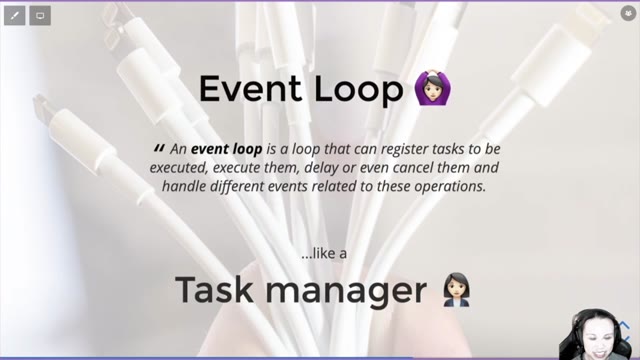
  3. Slide 26 of “Don't be Afraid of Async”, kept at 18:22

    #26 · 18:22

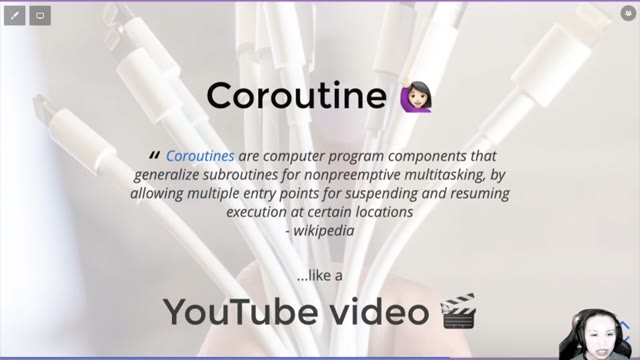
  4. Slide 29 of “Don't be Afraid of Async”, kept at 20:43

    #29 · 20:43

  5. Slide 30 of “Don't be Afraid of Async”, kept at 21:37

    #30 · 21:37

  6. Slide 31 of “Don't be Afraid of Async”, kept at 22:59

    #31 · 22:59

29:38 of recording → 45 slides kept

Recording from FOSDEM, used under CC BY 2.0 BE. open the recording · Rights concern? request removal

A webinar recording is an hour of video wrapped around a slide deck you actually want. Video2Any extracts that deck: it steps through the footage, keeps one clean frame per slide, and gives you an editable .pptx for notes, review, or reuse. It reads the video on your machine, so nothing uploads and long recordings stay private.

Whatever platform hosted it

Zoom Webinar, GoToWebinar, ON24, Demio, Livestorm, BigMarker, Webex Events — every one of them hands you a recording rather than the deck that was presented. Once you have the .mp4, that is all Video2Any needs; the slides are inside that file regardless of which service produced it, because a webinar recording is a screen capture of the presentation.

The step people get stuck on is getting the file at all. A replay link usually streams rather than downloads, and the host's dashboard is where the actual MP4 lives — in Zoom's web portal under Recordings, in GoToWebinar under the session's recording, in ON24 under the elite console's archive. If you attended rather than hosted, the download is something the organizer has and you do not.

Skipping the parts that are not slides

A webinar is a deck wrapped in packaging. There is a countdown holding slide before the start, a branded intro, a presenter on camera doing the welcome, polls thrown up mid-session, a live Q&A at the end, and an outro with a call to action. Only some of that is a slide you want.

Most of it never registers, because Video2Any keeps a frame only when the picture changed and then held still — a countdown ticks, a talking head moves, a chat panel scrolls. What does slip through is the small set that genuinely is a static screen: a poll, a holding card, a title frame. Those are three clicks to delete in the review grid, which is faster than any setting could be.

Long recordings are the normal case here

Webinars run 45 to 90 minutes, which makes this the page where length matters most. There is no cap on the file itself, and a two-hour recording works. What length costs is your own time: reckon on about seven minutes of sweeping per 70 minutes of video, with the tab open while it runs.

The free tier converts a video under 30 minutes in full and reads the first 30 minutes of a longer one, and Video2Any says which before it starts rather than after — spending seven minutes of your machine only to be told the last hour was skipped would be the worst possible order. A free account analyzes one long recording end to end, once. After that $2.99 unlocks two more, and $29 is a one-time payment that removes the limit for good.

The camera bubble and the branded frame

Webinar platforms decorate the picture: a presenter thumbnail in a corner, a logo bug, a lower-third banner, sometimes a live countdown clock. Each of those changes in every single frame, and a naive comparison would call every frame a new slide and return hundreds of near-identical images.

Video2Any looks at the whole recording first, finds the regions that never stop moving, and leaves them out of the comparison. You do not have to crop the frame. If those regions cover so much of the picture that ignoring them would hide real slide changes too, Video2Any compares the full frame instead — the right call rather than a failure.

Animated builds, and how many slides you should expect

Webinar decks lean on animation: bullets appear one at a time, charts build in stages, numbers count up. Each step is a genuinely different picture, so a strict reading would turn one slide into six.

Video2Any waits for the state a slide comes to rest on, which is usually the complete version. When it still keeps more than you wanted, the density control re-slices the run you already have — sparser to merge near-duplicates, denser to recover each build step — and it does not re-read the video, so it takes a second rather than another seven minutes.

What you can take away

An editable .pptx by default, opened by PowerPoint, Keynote and Google Slides. Video2Any also reads the text on each slide on your own device and adds it as real text boxes, so a statistic from someone else's webinar is something you can quote, search and cite rather than squint at.

The same run also exports PDF, Word, Markdown with the images, a folder of frames, one PNG holding every slide as a contact sheet, the audio on its own, subtitles as .srt or .vtt, and a single self-contained HTML file that opens anywhere with no account.

Turning a webinar you ran into something reusable

If it was your webinar, the recording is an asset you already paid to produce and almost certainly under-used. The extracted deck is the raw material for the follow-up email, the gated PDF, the summary blog post, and the internal training version — all from a file that was otherwise going to sit in a dashboard.

The contact-sheet PNG is the quiet favourite for this. One image with every slide on it is what you send to a colleague who needs to know what was covered without watching ninety minutes.

Nothing is uploaded

Your browser opens the recording on your own machine and builds the deck there. The file never reaches a server, no account is required, nothing lands in storage, and there is no retention window to go and check, because nothing is held.

For a paid industry webinar, an internal training session, or a recording covered by a partner agreement, that matters more than the convenience does. The file stays where your organization already put it.

Does the length of the webinar matter?
The file itself is not capped, and a two-hour webinar is fine. Length affects two things: the free tier, which converts a video under 30 minutes in full and reads the first 30 minutes of a longer one, and your own time — expect roughly seven minutes of sweeping per 70 minutes of video. A free account covers one long recording in full.
Can I remove duplicate or blank slides?
Yes. Every extracted slide lands in a review grid where you can delete and reorder before exporting. There is also a density control that re-slices the whole run at once, without re-reading the video.
How do I download the recording from the webinar platform?
The MP4 lives in the host's dashboard — Zoom's web portal under Recordings, GoToWebinar under the session, ON24 in the archive. A replay link usually streams rather than downloads, so if you attended rather than hosted, the file is something the organizer has.
Will it capture the poll screens and the intro?
Some of them, because a poll is a static screen and looks like a slide. Moving parts — the countdown, the talking-head welcome, the scrolling chat — never register at all. Whatever slips through takes a few clicks to delete before you export.
The presenter was in a corner of the frame the whole time.
That is handled. Video2Any finds the regions that move in every frame — a camera bubble, a logo bug, a running clock — and excludes them from the comparison automatically, so the deck follows the slides.
Can I use slides from someone else's webinar?
Extracting them for your own notes and reference is ordinary personal use. Republishing another company's slides is their copyright, not yours, and nothing here changes that — what you have is a private copy of what you already watched.
Is the recording uploaded anywhere?
No. Your browser opens the file on your own computer and assembles the deck there. It never reaches a server, no account is needed, and nothing is stored — which is also why it costs nothing to offer.
Can I get the spoken content as well as the slides?
Yes. The same run produces a timestamped transcript, subtitles as .srt or .vtt, and Word or Markdown documents with the slides and the words together. All of it is produced on your device.