AI ノートの利用にはログインが必要です。動画ファイルはアップロードしません。ノートを始めると、音声と、ページがあるときはページの静止画が送られます。
講義の全ページに講稿を
録画を開いてページを取り出し、「講稿」を始めます。話した内容が章ごとに一つの講稿にまとまり、ページごとのノートも付きます。ページはブラウザに残ります。動画ファイルはアップロードしません。講稿を始めると、音声と、ページがあるときはページの静止画が送られます。
- ページごとに講稿
- 講稿と文字起こし .txt/.srt
- 動画3本まで無料
使い方
ブラウザでページを取り出す
講義、会議、画面録画をドロップします。タブでしか再生できない動画は Chrome 拡張機能を使います。ページは端末上で見つけます。
「講稿」を始める
確認画面で、無料・有料のルールを確認します。音声を先に送って文字起こしがすぐ始まり、ページの静止画はあとから送られて講稿づくりに使われます。講稿は章ごとにまとまります。
確認して書き出す
パネルでノートを直し、読むモードで確認します。Markdown、Word、PDF(手元のページ画像つき)や、文字起こしの .txt / .srt を書き出せます。
できあがるもの
 4:39
The speaker uses an opening anecdote to introduce the technical and value-based challenges of being a FLOSS tools user in a social science setting. On the technical side, the first challenge is that the speaker does not know how to code. This meant they did not exploit Torque to the fullest or use its Python library programmatically, and had to rely on a third party to build the network that was eventually imported into Gephi.
要約
Maya introduces her talk on how free/libre and open source software (FLOSS) meets social science research, opening with the quote often attributed to Henry Ford—"If I had asked people what they wanted, they would have said faster horses"—to illustrate users' inability to convey their needs to innovators. She notes this is the opposite of how open source development and open research grow: by valuing and promoting user feedback toward community-oriented goals.
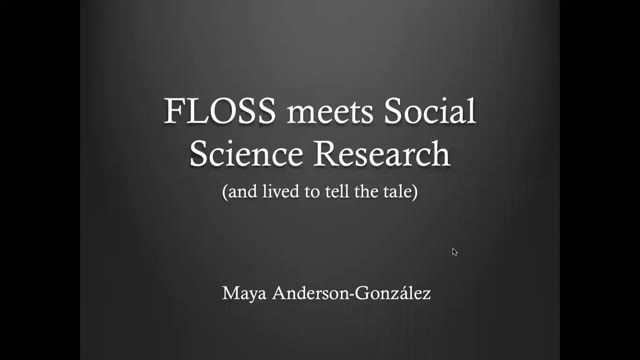
The speaker introduces herself as Maya and says she will talk about how floss meets social science research and lives to tell the tale. She begins with a quote: if people had been asked what they wanted, they would have said faster horses.
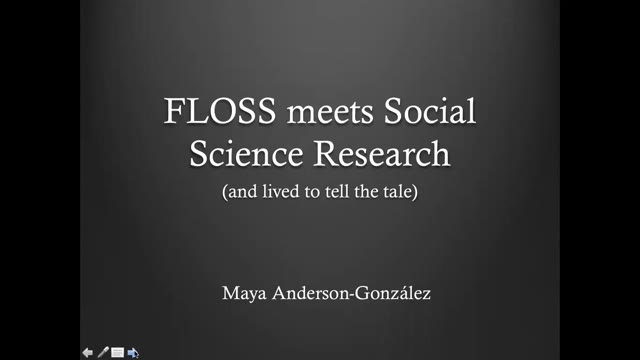
The speaker introduces herself as Maya and frames the talk around how free/libre and open source software (floss) meets social science research. She opens with the quote often attributed to Henry Ford—"If I had asked people what they wanted, they would have said faster horses"—used to illustrate users' inability to convey their needs to innovators. She notes this is the opposite of how open source development and open research grow and improve: by valuing and promoting user feedback to reach community-oriented goals.
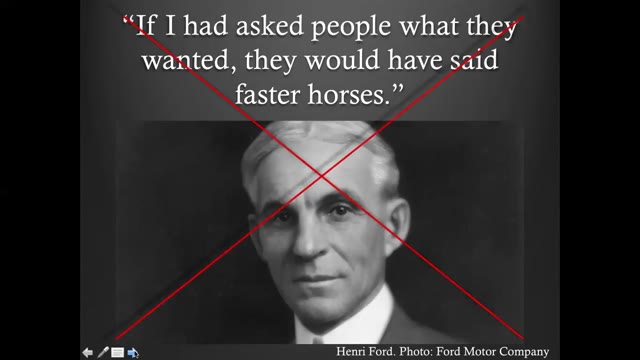
I'll share experiences as a user of FLOSS tools for open research in social science. Specifically, I'll talk about a team project I worked on to produce and analyze a Twitter follow graph of last year's FOSDEM and Chaos Con participants.
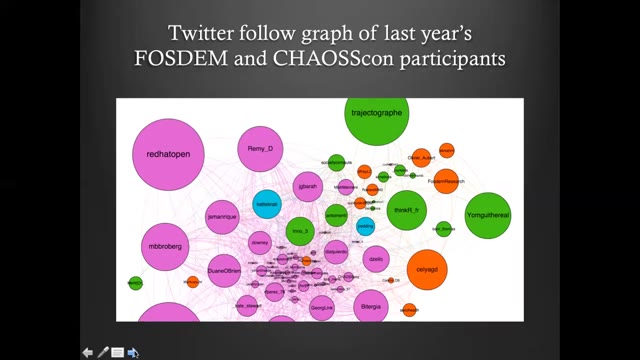
The speaker shares their experience as a user of FLOSS tools for open research in social science, focusing on a team project that produced and analyzed a Twitter follow graph of last year's FOSDEM and Chaos Con participants. The project used open source tools and agile management: data was collected with the command line tool Torque, network visualization was done with Gephi, and Framagit provided a collaborative framework for managing code, data, visualization, and text. Implementing the project led to insight about what it takes for social scientists with minimal tech knowledge or exposure to open source values to practice open research with FLOSS tools.
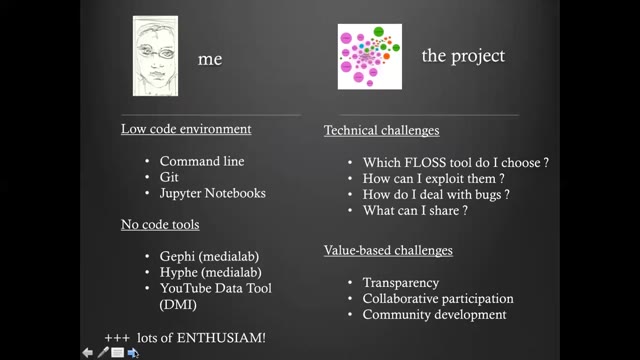
Implementing the project gave insight into what it takes for social scientists with minimal tech knowledge or exposure to open source values to practice open research with FLOSS tools. Three types of challenges are addressed: training, documenting, and collaborating. The speaker's user background: minimal experience with digital tools for research—only the basics of the terminal, version control with Git, and executing code in Jupyter notebooks, plus some no-code tools like Gephi, HIVE, and YouTube Data Tool, which they liked and were eager to do more of.
The speaker uses an opening anecdote to introduce the technical and value-based challenges of being a FLOSS tools user in a social science setting. On the technical side, the first challenge is that the speaker does not know how to code. This meant they did not exploit Torque to the fullest or use its Python library programmatically, and had to rely on a third party to build the network that was eventually imported into Gephi.
The second challenge was with the community detection calculation in Gephi, which gave a different result each time it was launched unless it was expressly told to always start with the same node in the network. Once this was realized, everything was written down in the project wiki, which led to an important lesson about documentation to be covered later. A main advantage of Gephi is its real-time visualization feature that lets you zoom in for high granularity, but the preview screen was blank—the third challenge. The bug fix found on the forum wasn't effective, so the separate preview tab was used to visualize the network as a whole and zoom in, though not as smoothly.
The bug fix found on the forum wasn't effective, but the separate preview tab allowed visualizing the network as a whole and zooming in, though not as smoothly. The bug was frustrating in the long run and led the team to explore other alternatives, including a different open source network visualization tool developed expressly for Twitter data called Twitter Explorer. Its advantage is being very user friendly, but in its early stages it lacked many functions Gephi provided—for instance, Twitter Explorer only has one layout option, whereas Gephi has several.
実例:FOSDEM 2021 デモ講演(CC BY 2.0 BE)のノート。章ごとに一つの講稿、ページごとにノート。
書き出し形式
- Markdown
- .md。ページ画像を組み合わせたときは notes.md と images/ の入った .zip。
- Word
- .docx。手元にページ画像があれば埋め込みます。
- 連続したレイアウト。必要なら CJK フォントのサブセットを入れます。
- 文字起こし .txt
- 段落で整理し、[mm:ss] の時刻は任意。
- 文字起こし .srt
- 文字起こしの区間ごとに1つの字幕。
- そのほか
- スライドを書き出すと、講稿は各ページの発表者メモに入ります。
# Maya Anderson-González, FLOSS meets Social Science Research, FOSDEM 2021

Maya introduces her talk on how free/libre and open source software (FLOSS) meets social science research, opening with the quote often attributed to Henry Ford—"If I had asked people what they wanted, they would have said faster horses"—to illustrate users' inability to convey their needs to innovators. She notes this is the opposite of how open source development and open research grow: by valuing and promoting user feedback toward community-oriented goals.

## 0:38

The speaker introduces herself as Maya and says she will talk about how floss meets social science research and lives to tell the tale. She begins with a quote: if people had been asked what they wanted, they would have said faster horses.

## 0:53

The speaker introduces herself as Maya and frames the talk around how free/libre and open source software (floss) meets social science research. She opens with the quote often attributed to Henry Ford—"If I had asked people what they wanted, they would have said faster horses"—used to illustrate users' inability to convey their needs to innovators. She notes this is the opposite of how open source development and open research grow and improve: by valuing and promoting user feedback to reach community-oriented goals.

## 1:34

I'll share experiences as a user of FLOSS tools for open research in social science. Specifically, I'll talk about a team project I worked on to produce and analyze a Twitter follow graph of last year's FOSDEM and Chaos Con participants.


— CC BY 2.0 BE
発表者メモ · 4:39
The speaker uses an opening anecdote to introduce the technical and value-based challenges of being a FLOSS tools user in a social science setting. On the technical side, the first challenge is that the speaker does not know how to code. This meant they did not exploit Torque to the fullest or use its Python library programmatically, and had to rely on a third party to build the network that was eventually imported into Gephi.
書き出しは追加料金なしです。講稿の実行で支払った分、または無料回数に含まれます。
こんな場面で
講義
学期の講義録画がページと講稿になり、試験前にそのまま復習できます。
会議
スライドの多い会議で、ページごとに話した要点が並びます。
YouTube とオンライン講座
手元のファイルを使います。タブでしか再生できないときは拡張機能でページを取ります。講稿には処理できる音声が必要です。
料金
- 講稿は同じ残高を使います。音声1分につき $0.01。
- 課金は音声の分単位(1分未満は1分として計算)。ページ数は料金に影響しません。
- アカウントごとに3回まで無料で完了できます(各30分・60ページ以内)。
- 料金は完了したときだけ引きます。失敗しても無料回数は減らず、料金もかかりません。
- Lifetime の $10 も同じ残高に入ります。追加は請求ページから。
- 1回の上限は300ページ、180分、音声95 MBです。
よくある質問
- 動画ファイルは端末の外に出ますか?
- いいえ。ページはブラウザで取り出し、動画ファイルはアップロードしません。講稿を始めると、音声と、ページがあるときはページの静止画が送られます。
- アカウントは必要ですか?
- はい。講稿はログインしたアカウントでのみ動きます。
- 料金はどうなりますか?
- 初めの3回は無料で完了できます(各30分・60ページ以内)。その後は音声1分につき $0.01 を共通の残高から、成功したときだけ引きます。
- 文字起こしはダウンロードできますか?
- はい。文字起こしが終わると、書き出しメニューに .txt と .srt が出ます。
- ブラウザのプレーヤーでしか見られない動画は?
- 拡張機能ならタブからページを読めます。講稿には処理できる手元の音声が要ります。音声がないときは、送る音声がないと画面に表示します。
- ノートはページの静止画を見て書きますか?
- 講稿は文字起こしから書きます。ページがあるときは、ページの静止画も文字起こしと一緒にモデルへ送ります。書き出しには、エディタにあるページ画像を添えられます。