É preciso entrar na conta para gerar notas com IA. O arquivo de vídeo não é enviado; ao começar as notas, o áudio e, quando a tarefa tem páginas, as imagens das páginas são enviados.
Anotações em cada página de uma aula
Abra uma gravação, extraia as páginas e comece as anotações. A aula vira um documento por capítulos, com notas do que foi dito em cada página. As páginas ficam no navegador. O arquivo de vídeo não é enviado; ao começar as anotações, o áudio e, quando o trabalho tem páginas, as imagens das páginas são enviados.
- Cada página, suas anotações
- Anotações e transcrição .txt/.srt
- 3 execuções grátis
Como funciona
Extraia as páginas no navegador
Arraste uma aula, reunião ou gravação de tela. Se o vídeo só toca em uma aba, use a extensão do Chrome. As páginas são encontradas no seu aparelho.
Comece as anotações
Confirme o aviso: as regras de grátis e pago aparecem antes. O áudio sobe primeiro e a transcrição começa na hora; as imagens das páginas chegam depois para escrever as anotações. O documento é organizado por capítulos.
Revise e exporte
Edite as notas no painel e leia no modo leitura. Exporte Markdown, Word ou PDF com as imagens de página que você tiver, ou a transcrição em .txt / .srt.
O que você recebe
 4:39
The speaker uses an opening anecdote to introduce the technical and value-based challenges of being a FLOSS tools user in a social science setting. On the technical side, the first challenge is that the speaker does not know how to code. This meant they did not exploit Torque to the fullest or use its Python library programmatically, and had to rely on a third party to build the network that was eventually imported into Gephi.
Resumo
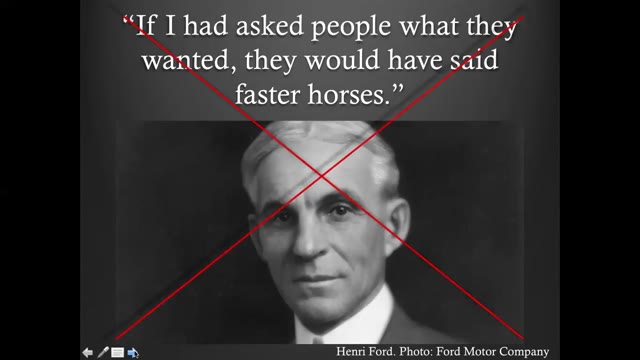
Maya introduces her talk on how free/libre and open source software (FLOSS) meets social science research, opening with the quote often attributed to Henry Ford—"If I had asked people what they wanted, they would have said faster horses"—to illustrate users' inability to convey their needs to innovators. She notes this is the opposite of how open source development and open research grow: by valuing and promoting user feedback toward community-oriented goals.
The speaker introduces herself as Maya and says she will talk about how floss meets social science research and lives to tell the tale. She begins with a quote: if people had been asked what they wanted, they would have said faster horses.
The speaker introduces herself as Maya and frames the talk around how free/libre and open source software (floss) meets social science research. She opens with the quote often attributed to Henry Ford—"If I had asked people what they wanted, they would have said faster horses"—used to illustrate users' inability to convey their needs to innovators. She notes this is the opposite of how open source development and open research grow and improve: by valuing and promoting user feedback to reach community-oriented goals.
I'll share experiences as a user of FLOSS tools for open research in social science. Specifically, I'll talk about a team project I worked on to produce and analyze a Twitter follow graph of last year's FOSDEM and Chaos Con participants.
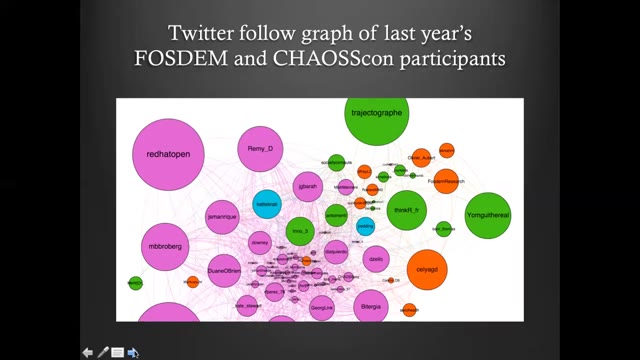
The speaker shares their experience as a user of FLOSS tools for open research in social science, focusing on a team project that produced and analyzed a Twitter follow graph of last year's FOSDEM and Chaos Con participants. The project used open source tools and agile management: data was collected with the command line tool Torque, network visualization was done with Gephi, and Framagit provided a collaborative framework for managing code, data, visualization, and text. Implementing the project led to insight about what it takes for social scientists with minimal tech knowledge or exposure to open source values to practice open research with FLOSS tools.
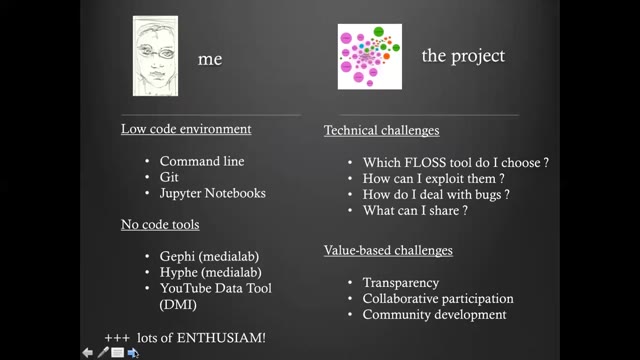
Implementing the project gave insight into what it takes for social scientists with minimal tech knowledge or exposure to open source values to practice open research with FLOSS tools. Three types of challenges are addressed: training, documenting, and collaborating. The speaker's user background: minimal experience with digital tools for research—only the basics of the terminal, version control with Git, and executing code in Jupyter notebooks, plus some no-code tools like Gephi, HIVE, and YouTube Data Tool, which they liked and were eager to do more of.
The speaker uses an opening anecdote to introduce the technical and value-based challenges of being a FLOSS tools user in a social science setting. On the technical side, the first challenge is that the speaker does not know how to code. This meant they did not exploit Torque to the fullest or use its Python library programmatically, and had to rely on a third party to build the network that was eventually imported into Gephi.
The second challenge was with the community detection calculation in Gephi, which gave a different result each time it was launched unless it was expressly told to always start with the same node in the network. Once this was realized, everything was written down in the project wiki, which led to an important lesson about documentation to be covered later. A main advantage of Gephi is its real-time visualization feature that lets you zoom in for high granularity, but the preview screen was blank—the third challenge. The bug fix found on the forum wasn't effective, so the separate preview tab was used to visualize the network as a whole and zoom in, though not as smoothly.
The bug fix found on the forum wasn't effective, but the separate preview tab allowed visualizing the network as a whole and zooming in, though not as smoothly. The bug was frustrating in the long run and led the team to explore other alternatives, including a different open source network visualization tool developed expressly for Twitter data called Twitter Explorer. Its advantage is being very user friendly, but in its early stages it lacked many functions Gephi provided—for instance, Twitter Explorer only has one layout option, whereas Gephi has several.
Exemplo real: notas da palestra demo do FOSDEM 2021 (CC BY 2.0 BE). Um documento por capítulos, com notas em cada página.
Formatos de exportação
- Markdown
- .md, ou um .zip com notes.md e uma pasta images/ quando as imagens de página entram.
- Word
- .docx, com as imagens de página embutidas quando você as tem.
- Layout contínuo. Inclui um subconjunto de fonte CJK quando necessário.
- Transcrição .txt
- Parágrafos, com marcas [mm:ss] opcionais.
- Transcrição .srt
- Uma legenda por trecho da transcrição.
- Também
- As notas vão para as notas do apresentador ao exportar a apresentação.
# Maya Anderson-González, FLOSS meets Social Science Research, FOSDEM 2021

Maya introduces her talk on how free/libre and open source software (FLOSS) meets social science research, opening with the quote often attributed to Henry Ford—"If I had asked people what they wanted, they would have said faster horses"—to illustrate users' inability to convey their needs to innovators. She notes this is the opposite of how open source development and open research grow: by valuing and promoting user feedback toward community-oriented goals.

## 0:38

The speaker introduces herself as Maya and says she will talk about how floss meets social science research and lives to tell the tale. She begins with a quote: if people had been asked what they wanted, they would have said faster horses.

## 0:53

The speaker introduces herself as Maya and frames the talk around how free/libre and open source software (floss) meets social science research. She opens with the quote often attributed to Henry Ford—"If I had asked people what they wanted, they would have said faster horses"—used to illustrate users' inability to convey their needs to innovators. She notes this is the opposite of how open source development and open research grow and improve: by valuing and promoting user feedback to reach community-oriented goals.

## 1:34

I'll share experiences as a user of FLOSS tools for open research in social science. Specifically, I'll talk about a team project I worked on to produce and analyze a Twitter follow graph of last year's FOSDEM and Chaos Con participants.


— CC BY 2.0 BE
Notas do apresentador · 4:39
The speaker uses an opening anecdote to introduce the technical and value-based challenges of being a FLOSS tools user in a social science setting. On the technical side, the first challenge is that the speaker does not know how to code. This meant they did not exploit Torque to the fullest or use its Python library programmatically, and had to rely on a third party to build the network that was eventually imported into Gephi.
Exportar não custa à parte. A execução das anotações que você já pagou, ou a vez grátis, cobre isso.
Onde serve
Aulas
Uma gravação do curso vira páginas com anotações para revisar antes da prova.
Reuniões
Uma reunião com muitos slides ganha notas em cada página, junto do que foi mostrado.
YouTube e cursos
Use um arquivo local, ou a extensão quando o vídeo só toca em uma aba. As anotações ainda precisam de áudio de um arquivo que você consiga processar.
Preço
- As anotações usam o mesmo saldo. Um minuto de áudio custa $0,01.
- A cobrança é por minuto de áudio, arredondado para cima. O número de páginas não muda o preço.
- 3 execuções concluídas grátis por conta, de até 30 minutos e 60 páginas cada.
- A cobrança só acontece quando o trabalho termina. Se falhar, não gasta a vez grátis nem cobra.
- O crédito de $10 do plano Lifetime fica no mesmo saldo. Recarregue na página de cobrança.
- Limites por trabalho: 300 páginas, 180 minutos e 95 MB de áudio.
Perguntas
- O arquivo de vídeo sai do meu aparelho?
- Não. As páginas são extraídas no navegador e o arquivo de vídeo não é enviado. Ao começar as anotações, o áudio e, quando o trabalho tem páginas, as imagens das páginas são enviados.
- Preciso de uma conta?
- Sim. As anotações só funcionam com uma conta conectada.
- Como eu pago?
- 3 execuções concluídas grátis, de até 30 minutos e 60 páginas. Depois você paga $0,01 por minuto de áudio do saldo compartilhado, só se terminar.
- Posso baixar a transcrição?
- Sim. Quando a transcrição termina, o menu de exportação oferece .txt e .srt.
- E se o vídeo só toca em uma aba?
- A extensão lê as páginas da aba. As anotações ainda precisam de áudio de um arquivo local que você consiga processar. Sem ele, o produto avisa que não há áudio para enviar.
- As notas são escritas a partir das imagens das páginas?
- O documento é escrito a partir da transcrição e, quando o trabalho tem páginas, também das imagens. As imagens vão ao modelo junto com a transcrição. A exportação também pode incluir as imagens que você já tem no editor.