Du brauchst ein Konto für KI-Mitschriften. Die Videodatei wird nicht hochgeladen; beim Start der Mitschriften gehen der Ton und, wenn der Lauf Seiten hat, die Seitenbilder hinaus.
Notizen auf jeder Seite einer Vorlesung
Öffne eine Aufnahme, extrahiere die Seiten und starte die Mitschriften. Die Vorlesung wird ein Dokument nach Kapiteln, mit Notizen zu dem, was auf jeder Seite gesagt wurde. Die Seiten bleiben im Browser. Die Videodatei wird nicht hochgeladen; beim Start der Mitschriften gehen der Ton und, wenn der Lauf Seiten hat, die Seitenbilder hinaus.
- Jede Seite, ihre Notizen
- Notizen und Transkript .txt/.srt
- 3 Läufe kostenlos
So funktioniert es
Seiten im Browser extrahieren
Zieh eine Vorlesung, ein Meeting oder eine Bildschirmaufnahme hinein. Läuft das Video nur in einem Tab, nutze die Chrome-Erweiterung. Die Seiten werden auf deinem Gerät gefunden.
Mitschriften starten
Bestätige den Hinweis: die Regeln für gratis und bezahlt stehen vorher da. Der Ton geht zuerst hinaus und die Transkription beginnt sofort; die Seitenbilder folgen für das Schreiben. Das Dokument ist nach Kapiteln gegliedert.
Prüfen und exportieren
Bearbeite die Notizen im Panel und lies sie im Lesemodus. Exportiere Markdown, Word oder PDF mit den Seitenbildern, die du hast, oder das Transkript als .txt / .srt.
Was du bekommst
 4:39
The speaker uses an opening anecdote to introduce the technical and value-based challenges of being a FLOSS tools user in a social science setting. On the technical side, the first challenge is that the speaker does not know how to code. This meant they did not exploit Torque to the fullest or use its Python library programmatically, and had to rely on a third party to build the network that was eventually imported into Gephi.
Zusammenfassung
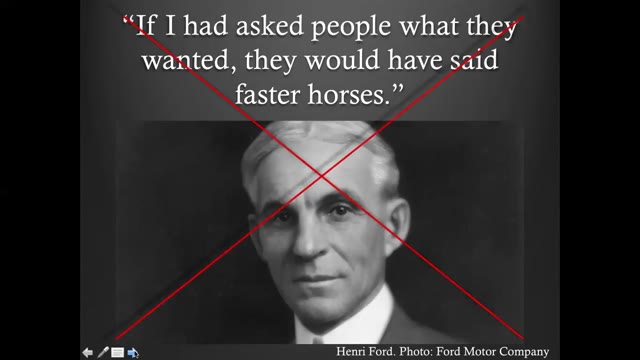
Maya introduces her talk on how free/libre and open source software (FLOSS) meets social science research, opening with the quote often attributed to Henry Ford—"If I had asked people what they wanted, they would have said faster horses"—to illustrate users' inability to convey their needs to innovators. She notes this is the opposite of how open source development and open research grow: by valuing and promoting user feedback toward community-oriented goals.
The speaker introduces herself as Maya and says she will talk about how floss meets social science research and lives to tell the tale. She begins with a quote: if people had been asked what they wanted, they would have said faster horses.
The speaker introduces herself as Maya and frames the talk around how free/libre and open source software (floss) meets social science research. She opens with the quote often attributed to Henry Ford—"If I had asked people what they wanted, they would have said faster horses"—used to illustrate users' inability to convey their needs to innovators. She notes this is the opposite of how open source development and open research grow and improve: by valuing and promoting user feedback to reach community-oriented goals.
I'll share experiences as a user of FLOSS tools for open research in social science. Specifically, I'll talk about a team project I worked on to produce and analyze a Twitter follow graph of last year's FOSDEM and Chaos Con participants.
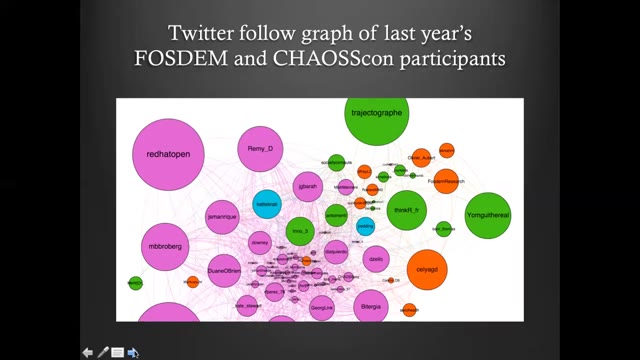
The speaker shares their experience as a user of FLOSS tools for open research in social science, focusing on a team project that produced and analyzed a Twitter follow graph of last year's FOSDEM and Chaos Con participants. The project used open source tools and agile management: data was collected with the command line tool Torque, network visualization was done with Gephi, and Framagit provided a collaborative framework for managing code, data, visualization, and text. Implementing the project led to insight about what it takes for social scientists with minimal tech knowledge or exposure to open source values to practice open research with FLOSS tools.
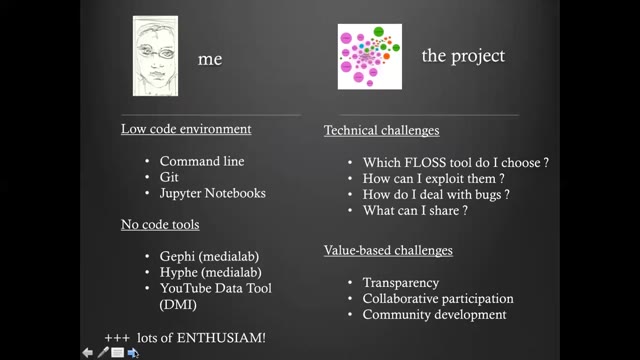
Implementing the project gave insight into what it takes for social scientists with minimal tech knowledge or exposure to open source values to practice open research with FLOSS tools. Three types of challenges are addressed: training, documenting, and collaborating. The speaker's user background: minimal experience with digital tools for research—only the basics of the terminal, version control with Git, and executing code in Jupyter notebooks, plus some no-code tools like Gephi, HIVE, and YouTube Data Tool, which they liked and were eager to do more of.
The speaker uses an opening anecdote to introduce the technical and value-based challenges of being a FLOSS tools user in a social science setting. On the technical side, the first challenge is that the speaker does not know how to code. This meant they did not exploit Torque to the fullest or use its Python library programmatically, and had to rely on a third party to build the network that was eventually imported into Gephi.
The second challenge was with the community detection calculation in Gephi, which gave a different result each time it was launched unless it was expressly told to always start with the same node in the network. Once this was realized, everything was written down in the project wiki, which led to an important lesson about documentation to be covered later. A main advantage of Gephi is its real-time visualization feature that lets you zoom in for high granularity, but the preview screen was blank—the third challenge. The bug fix found on the forum wasn't effective, so the separate preview tab was used to visualize the network as a whole and zoom in, though not as smoothly.
The bug fix found on the forum wasn't effective, but the separate preview tab allowed visualizing the network as a whole and zooming in, though not as smoothly. The bug was frustrating in the long run and led the team to explore other alternatives, including a different open source network visualization tool developed expressly for Twitter data called Twitter Explorer. Its advantage is being very user friendly, but in its early stages it lacked many functions Gephi provided—for instance, Twitter Explorer only has one layout option, whereas Gephi has several.
Echtes Beispiel: Notizen aus dem FOSDEM-2021-Demovortrag (CC BY 2.0 BE). Ein Dokument nach Kapiteln, mit Notizen auf jeder Seite.
Exportformate
- Markdown
- .md, oder ein .zip mit notes.md und einem images/-Ordner, wenn Seitenbilder dazukommen.
- Word
- .docx, mit eingebetteten Seitenbildern, wenn du sie hast.
- Fortlaufendes Layout. Bei Bedarf mit einer CJK-Schriftteilmenge.
- Transkript .txt
- Absätze, mit optionalen [mm:ss]-Zeitmarken.
- Transkript .srt
- Ein Untertitel pro Transkriptabschnitt.
- Außerdem
- Beim Export der Präsentation landen die Notizen in den Notizen des Vortragenden.
# Maya Anderson-González, FLOSS meets Social Science Research, FOSDEM 2021

Maya introduces her talk on how free/libre and open source software (FLOSS) meets social science research, opening with the quote often attributed to Henry Ford—"If I had asked people what they wanted, they would have said faster horses"—to illustrate users' inability to convey their needs to innovators. She notes this is the opposite of how open source development and open research grow: by valuing and promoting user feedback toward community-oriented goals.

## 0:38

The speaker introduces herself as Maya and says she will talk about how floss meets social science research and lives to tell the tale. She begins with a quote: if people had been asked what they wanted, they would have said faster horses.

## 0:53

The speaker introduces herself as Maya and frames the talk around how free/libre and open source software (floss) meets social science research. She opens with the quote often attributed to Henry Ford—"If I had asked people what they wanted, they would have said faster horses"—used to illustrate users' inability to convey their needs to innovators. She notes this is the opposite of how open source development and open research grow and improve: by valuing and promoting user feedback to reach community-oriented goals.

## 1:34

I'll share experiences as a user of FLOSS tools for open research in social science. Specifically, I'll talk about a team project I worked on to produce and analyze a Twitter follow graph of last year's FOSDEM and Chaos Con participants.


— CC BY 2.0 BE
Notizen des Vortragenden · 4:39
The speaker uses an opening anecdote to introduce the technical and value-based challenges of being a FLOSS tools user in a social science setting. On the technical side, the first challenge is that the speaker does not know how to code. This meant they did not exploit Torque to the fullest or use its Python library programmatically, and had to rely on a third party to build the network that was eventually imported into Gephi.
Der Export kostet nichts extra. Der Lauf, den du bezahlt oder mit einer freien Runde gemacht hast, deckt ihn ab.
Wo es passt
Vorlesungen
Eine Kursaufnahme wird zu Seiten mit Mitschriften, die du vor der Prüfung durchgehst.
Meetings
Ein Meeting mit vielen Folien bekommt Notizen pro Seite, direkt neben dem Gezeigten.
YouTube und Kurse
Nimm eine lokale Datei, oder die Erweiterung, wenn das Video nur in einem Tab läuft. Die Mitschriften brauchen weiterhin Ton aus einer Datei, die du verarbeiten kannst.
Preis
- Die Mitschriften nutzen dasselbe Guthaben. Eine Audiominute kostet 0,01 $.
- Abgerechnet wird pro Audiominute, aufgerundet. Die Seitenzahl ändert den Preis nicht.
- 3 abgeschlossene Läufe pro Konto gratis, jeweils bis 30 Minuten und 60 Seiten.
- Abgebucht wird erst bei Abschluss. Ein Fehlschlag verbraucht keine freie Runde und kostet nichts.
- Die 5 $ aus dem Lifetime-Kauf liegen auf demselben Guthaben. Aufladen auf der Abrechnungsseite.
- Grenzen pro Lauf: 300 Seiten, 180 Minuten und 128 MB Ton.
Fragen
- Verlässt die Videodatei mein Gerät?
- Nein. Die Seiten werden im Browser extrahiert, und die Videodatei wird nicht hochgeladen. Beim Start der Mitschriften gehen der Ton und, wenn der Lauf Seiten hat, die Seitenbilder hinaus.
- Brauche ich ein Konto?
- Ja. Mitschriften laufen nur mit einem angemeldeten Konto.
- Wie werde ich abgerechnet?
- 3 abgeschlossene Läufe gratis, jeweils bis 30 Minuten und 60 Seiten. Danach 0,01 $ pro Audiominute vom geteilten Guthaben, nur bei Erfolg.
- Kann ich das Transkript herunterladen?
- Ja. Wenn die Transkription fertig ist, bietet das Exportmenü .txt und .srt.
- Was ist, wenn das Video nur in einem Tab läuft?
- Die Erweiterung liest die Seiten aus dem Tab. Die Mitschriften brauchen weiterhin Ton aus einer lokalen Datei, die du verarbeiten kannst. Ohne sie sagt dir das Produkt, dass es keinen Ton zu senden gibt.
- Werden die Notizen aus den Seitenbildern geschrieben?
- Das Dokument entsteht aus dem Transkript und, wenn der Lauf Seiten hat, auch aus den Seitenbildern. Die Bilder gehen zusammen mit dem Transkript an das Modell. Der Export kann die Bilder aus dem Editor trotzdem anhängen.